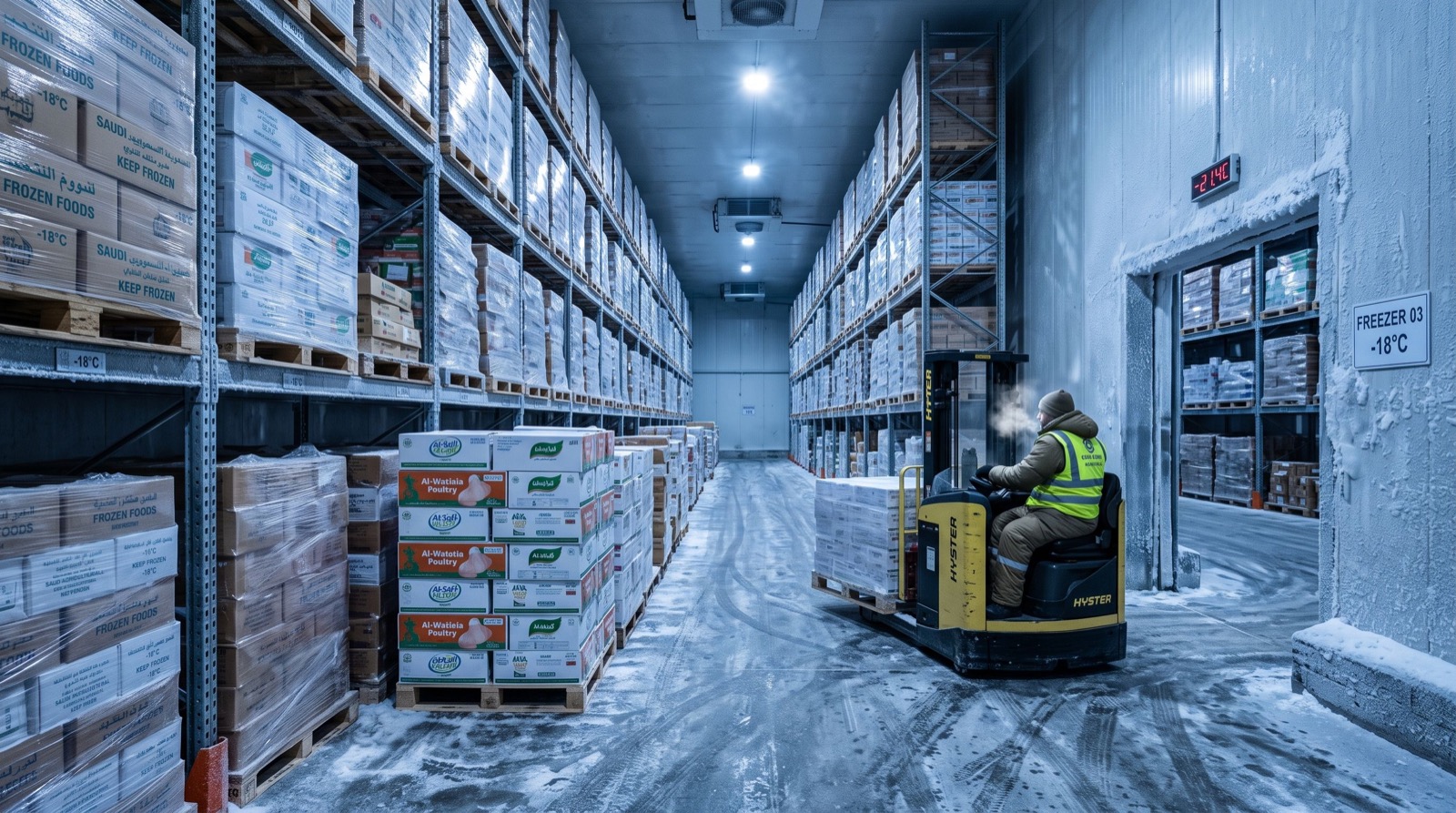
Every frozen prawn landed at an Eastern Province port begins a race against its own biology. From the moment it leaves the water, its journey to a plate is a continuous effort to hold time still through cold. Break that chain for even a few hours and the product does not just spoil; it becomes a liability, a health risk, and a financial loss that ripples back through the entire supply line. In the world of temperature-sensitive goods, the warehouse is not a resting place. It is a life-support system.
Dammam and the wider Eastern Province sit at the heart of this challenge. As one of the Kingdom’s busiest gateways for imports, seafood, and industrial goods, the region depends on cold storage the way a city depends on water. This article examines the economics and logistics of frozen warehousing, why it matters so much in this corner of Saudi Arabia, and how businesses can build supply chains that hold their value from port to point of sale.
The Cold Chain Is Only as Strong as Its Weakest Link
A cold chain is a promise made in degrees Celsius. Frozen goods must remain frozen not only in the warehouse but during unloading, transfer, and every pause in between. A single lapse, a truck left idling in the sun or a freezer that struggled overnight, can compromise an entire consignment even if the numbers look fine on arrival.
This is why serious operators think in terms of an unbroken chain rather than a series of isolated stops. Temperature is logged continuously, handover points are choreographed to minimise exposure, and backup systems stand ready for the moment the primary equipment falters. The discipline is relentless because the margin for error is measured in minutes, not hours.
Why Dammam Depends on Frozen Warehousing
The Eastern Province is a natural distribution hub, home to major ports and a dense network of industry and population. Seafood, meat, dairy, and frozen ready-meals flow through it in enormous volume, and all of them need somewhere to wait at sub-zero temperatures before moving on to retailers and restaurants across the Kingdom.
Access to dependable Frozen Storage in Dammam gives importers and wholesalers the breathing room to manage supply and demand intelligently. Instead of rushing perishables to market the moment they land, businesses can hold stock safely, release it as orders arrive, and avoid the panic selling that crushes margins. In a port city, that flexibility is worth as much as the freezer capacity itself.
The Real Economics of Sub-Zero Storage
Frozen warehousing is often seen purely as a cost, but that view misses half the picture. Yes, running industrial freezers demands energy and investment. Yet the alternative, losing product to spoilage or being forced to dump inventory at a discount, is almost always more expensive. Cold storage is best understood as insurance that also happens to enable smarter trading.
Consider the seafood importer who can hold a catch through a slow week rather than selling it cheap to clear space. Or the meat distributor who buys in bulk when prices dip and stores the surplus for months. The freezer becomes a financial tool, smoothing out the volatility of supply and letting businesses buy well and sell when the timing is right. Handled this way, storage pays for itself many times over.
Not Everything Belongs in the Freezer
A common mistake is treating cold storage as the answer to every warehousing question. Plenty of goods, from canned products and grains to packaging and shelf-stable ingredients, are better served by a stable, dry environment. Freezing them wastes energy and can even cause damage, while leaving them exposed to Saudi Arabia’s heat and humidity invites a different kind of spoilage.
This is where well-planned Dry Storage solutions in Saudi Arabia complete the picture. A mature operation matches each product to the conditions it actually needs, running frozen, chilled, and dry zones side by side under one roof. That flexibility lets a single supplier handle a full inventory without forcing everything into the same expensive, unsuitable box.
Key Takeaways
- A cold chain must stay unbroken from port to shelf; a single lapse can ruin a shipment.
- Dammam’s ports and industry make reliable frozen storage a regional necessity.
- Sub-zero warehousing is insurance and a trading tool, not merely a running cost.
- Holding stock lets businesses buy well and sell when timing favours them.
- Not all goods belong in the freezer; dry storage protects shelf-stable inventory.
- The strongest operations run frozen, chilled, and dry zones together under one roof.
Energy, Reliability and the Fear of Downtime
The nightmare scenario for any cold-storage operator is the silent failure, a compressor that quits in the small hours while everyone sleeps. Because the stakes are so high, the best facilities invest heavily in redundancy: backup generators, duplicated refrigeration units, and monitoring systems that raise an alarm the instant a reading drifts out of range.
Energy efficiency matters too, both for cost and for reliability. Modern insulation, high-speed doors that limit warm-air intrusion, and smart controls that avoid overworking equipment all reduce the strain on the system. A freezer that runs cool and steady is far less likely to fail than one constantly fighting to recover from heat that should never have entered in the first place.
Building a Supply Chain You Can Rely On
Choosing a storage partner is ultimately a decision about trust, because you are handing over goods whose entire value depends on someone else’s diligence. The questions worth asking are practical ones: How is temperature monitored and recorded? What happens during a power cut? How quickly can stock be located and dispatched when an order lands?
Businesses that seek out trusted professionals with a proven record tend to sleep better and lose less. A dependable operator does not just rent cold space; it becomes a guardian of your inventory, alert to the small warning signs that separate a minor hiccup from a catastrophic loss. In a business built on unbroken cold, that vigilance is everything.
Cold Done Right Is a Competitive Advantage
For companies trading perishables through the Eastern Province, warehousing is not a back-office detail. It is a decisive factor in whether the business thrives or bleeds slowly through spoilage and forced discounts. Get the cold chain right and you gain the freedom to buy shrewdly, hold confidently, and serve customers with product that arrives exactly as it should.
The path forward is to treat storage as a strategic asset rather than a necessary expense. When frozen and dry capacity are matched to real needs, backed by reliable equipment and watchful people, the whole supply chain becomes steadier and more profitable. In a market where a few degrees can decide the fate of an entire shipment, that steadiness is the surest kind of advantage.